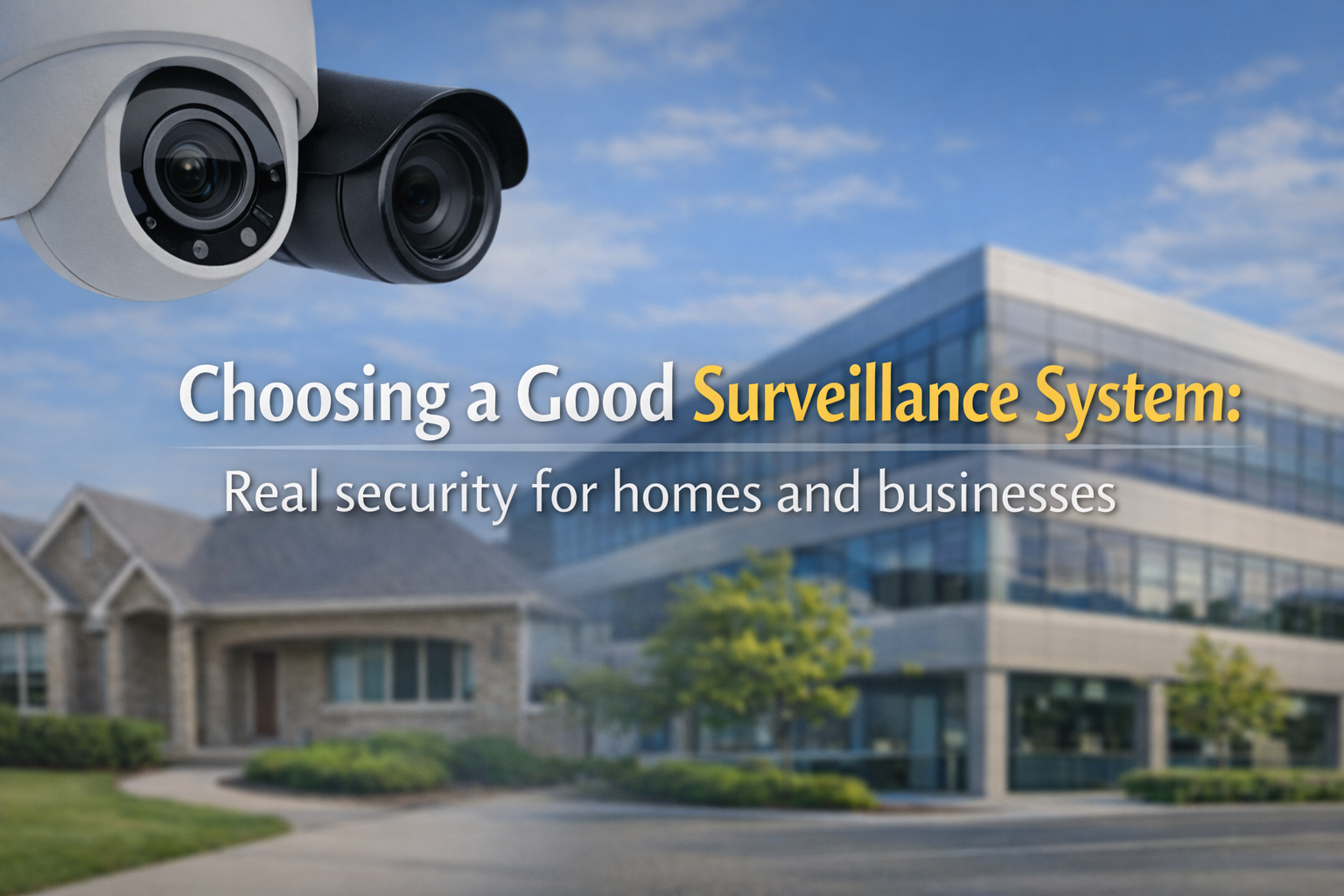
Video surveillance has become one of the most common security investments for homes, small businesses, and large enterprises alike. But not all camera systems are created equal. Some provide genuine protection, forensic value, and peace of mind. Others simply give the illusion of security.
Whether you’re protecting your family, your storefront, or critical infrastructure, this guide breaks down what actually matters when choosing a surveillance system—and how to avoid expensive mistakes.
Why Surveillance Systems Fail
Most people assume more cameras automatically means more security. In reality, surveillance systems usually fail for one of three reasons:
- Poor camera quality that can’t identify faces, plates, or events
- Bad placement that misses critical angles
- Weak infrastructure that loses footage when you need it most
Security isn’t about how many cameras you have. It’s about whether the footage is usable when it matters.
What Makes a Good Surveillance System
A strong system is built on three pillars: image quality, reliability, and design.
Image Quality That Holds Up in Real Conditions
Specs matter more than marketing terms. Look for:
- Resolution: 4MP minimum, 8MP (4K) for critical areas
- Low-light performance: True night capability, not just “infrared” claims
- Wide Dynamic Range (WDR): So faces aren’t blown out in bright light
- Frame rate: 15–30 FPS for usable motion capture
- Lens selection: Wide lenses for coverage, narrower lenses for identification
If you can’t clearly identify a face or event in real conditions, the camera has failed its purpose.
Storage That Protects Evidence
A camera without reliable storage is just a live stream.
You should understand:
- Where footage is stored (local NVR, cloud, hybrid)
- How long footage is retained
- Whether footage is encrypted
- What happens during power or internet outages
For businesses especially, retention policies can matter for insurance claims, liability protection, and legal investigations.
Proper Design and Placement
Good systems are designed, not randomly installed.
Critical considerations:
- Entry and exit points covered
- No blind spots in high-risk areas
- Camera height that avoids tampering
- Coverage of assets, not just walls
- Lighting conditions day and night
- Privacy considerations (staff, neighbors, public areas)
A professionally designed 6-camera system can outperform a poorly designed 20-camera system every time.
What Small Businesses Should Look For
Small and medium businesses face unique risks: theft, internal incidents, liability claims, after-hours access, and reputational damage.
They should prioritize:
- Remote secure access to cameras
- Audit trails of who accessed footage
- Motion alerts for after-hours activity
- Simple retrieval of footage when incidents occur
- Integration with alarm systems
- Business-grade hardware (not consumer gear)
Retail, warehouses, offices, clinics, and service businesses all benefit when surveillance supports operations not just security.
What Enterprises Should Consider
At the enterprise level, surveillance becomes part of infrastructure and risk management.
Key expectations:
- Centralized management across sites
- Role-based access control
- Integration with identity systems
- Integration with access control and alarms
- Strong cybersecurity controls on cameras
- Network segmentation for surveillance traffic
- Long-term lifecycle planning
Cameras are no longer just physical devices. They are networked computers with risk implications.
What Consumers Should Look For at Home
For homeowners and families, the priorities are slightly different but equally important.
Look for:
- Strong mobile app experience
- Secure authentication (MFA if possible)
- Local storage options, not cloud-only
- Clear privacy controls
- Reliable notifications
- Cameras that work in winter, heat, and rain
Cheap cameras often mean poor encryption, questionable data handling, and unreliable alerts.
The Overlooked Risk: Camera Cybersecurity
One of the most ignored aspects of surveillance is that cameras are computers connected to your network.
Poorly secured cameras can:
- Be accessed remotely by attackers
- Be used as entry points into your network
- Leak footage to third parties
- Violate privacy obligations
A secure surveillance system includes:
- Strong passwords and MFA
- Firmware patching
- Network isolation
- Encrypted storage
- Controlled access
Security without cybersecurity is incomplete.
How Tecative Helps
At Tecative, surveillance is not treated as a gadget purchase. It’s treated as a security architecture.
We help by:
- Designing systems based on real risk, not camera count
- Selecting professional-grade equipment, not consumer shortcuts
- Ensuring proper placement and coverage
- Securing the network side of the solution
- Designing storage and retention correctly
- Supporting homes, small businesses, and enterprise environments
- Providing long-term scalability rather than short-term installs
Whether you’re protecting a family home, a growing business, or a multi-site operation, the goal is the same: footage that works, security you can trust, and systems that don’t become liabilities.
We will help you define A good surveillance system that is invisible on normal days and invaluable on the worst day.
If the system fails during the one incident that matters, the investment was wasted.
Let's help you Design it properly. Secure it properly. Build it with intention.
That’s the difference between having cameras and having real security.
Comments (0)
No comments yet. Be the first to comment!












Leave a Comment